
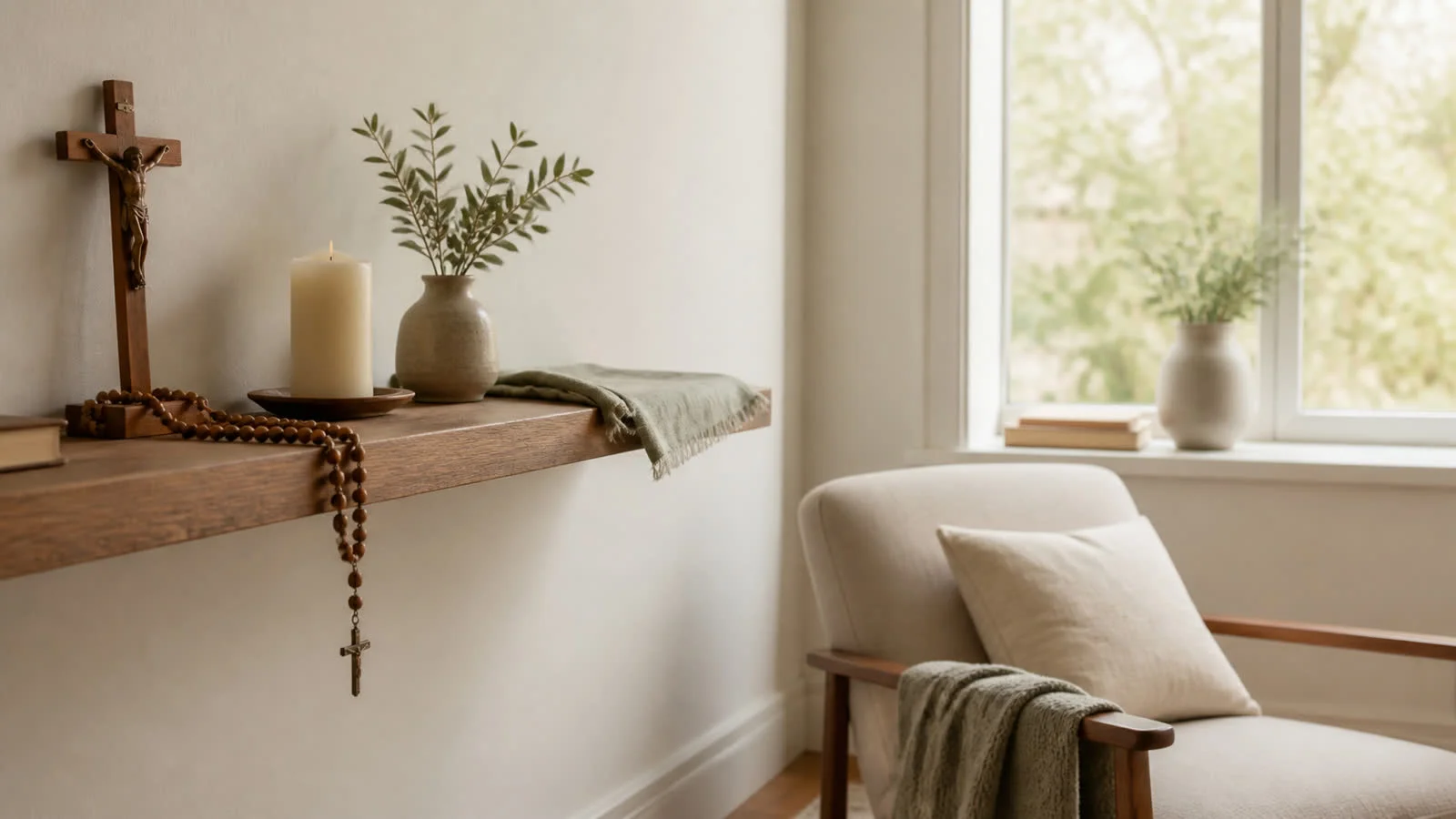
A prayer space does not need to look like a magazine photograph. You do not need a spare room, expensive furniture or a collection of objects. A peaceful place can be a chair near a window, one shelf, the end of a bedside table or a small corner of the kitchen.
The purpose is not to create an impressive display. It is to make prayer easier to begin and easier to recognise. A familiar place can gently remind you that you are allowed to stop for a few minutes.
Start with the space you already have
Look around your home and notice where you naturally slow down. It may be a place where you read, drink tea or sit after work. You do not need to choose the quietest room if you rarely use it. The best prayer space is one you can reach.
Clear a small surface rather than reorganising the whole room. A clean area for the Rosary and one other object may be enough. If the space is shared, make it easy to pack away or leave it in a way that respects everyone who uses the room.
The space can be temporary. You might place the Rosary on a table for prayer, then return it to a drawer. What matters is the intention behind the pause, not whether the arrangement remains all day.
Choose a few meaningful objects
A Rosary may be the centre of the space. You might add a small cross, a candle, a simple image or a notebook for prayer intentions. Choose objects that help you become attentive rather than objects that make you worry about maintaining a display.
If you use a candle, place it on a stable, heat-resistant surface and never leave it unattended. An electric candle can provide a similar visual cue without an open flame. Safety is part of a peaceful environment.
You do not need to include everything that matters to you. A small selection can make the space feel calm. If the number of objects becomes distracting, remove one and see whether the prayer feels easier.
Use light and texture gently
Soft natural light can make a space feel welcoming. If the room is dark, choose a lamp that is comfortable rather than harsh. Avoid placing the prayer space where glare from a screen will compete for your attention.
Natural materials such as wood, linen or ceramic can create a warm feeling, but they are not requirements. Use what you already own. The point is not a particular aesthetic. It is to make the place feel usable and sincere.
Keep the space easy to clean. A prayer corner should not become another source of guilt. If dust gathers or the arrangement changes, simply restore what is useful when you can.
Protect the space from digital noise
Your phone may be part of the way you pray, especially if you use guided Rosary audio. That does not mean every notification needs access to the moment. Use Do Not Disturb or a focus setting if it helps. Place the phone where you can hear Beadlight without automatically looking at every alert.
Choose the app settings before the Rosary begins. Select a custom Rosary style that feels calm, prepare an intention and start the guided audio if you want support. Then turn the screen away or set it down.
The space is not meant to make technology disappear. It is meant to make the technology serve the prayer rather than compete with it.
Make the space welcoming to family
If children or other family members share the home, the prayer space may change. Let it be visible without making anyone feel they have to behave perfectly around it. A child may ask questions or place a drawing nearby. You can decide together which objects should remain and which can be moved.
If you pray as a family, keep the space large enough for people to sit comfortably or use it as a starting point before moving elsewhere. A small corner can become a familiar signal even when the actual prayer takes place at the table or while walking.
Make room for different approaches. Someone may prefer silence, another may use guided audio and another may pray only for a few minutes. A shared space does not require identical habits.
Let the space carry an intention
Before you begin, decide what this place is for. It may be where you pray for people you love, give thanks, ask for patience or sit quietly after a difficult day. Naming the purpose helps the space stay connected to life.
Keep a notebook nearby if you find that writing helps. You can record a name, one sentence or a request to remember. Do not turn the notebook into a list you must complete. It is an aid for attention, not an additional obligation.
If you are returning to prayer, let the space mark a new beginning. You do not have to wait until you have a settled routine. Create the corner first, then allow the routine to grow around it.
Keep returning to a simple place
The most peaceful prayer space may be the one that asks the least of you. A Rosary, a stable chair and a few quiet minutes can be enough. Add something when it helps; remove something when it distracts.
Your home will continue to be lived in. Doors will open, people will talk and the day will leave objects on every surface. Prayer does not require the whole house to be still. It only needs a small place where you can begin again.
Start by noticing where you already feel a little less rushed. It might be a corner of a bedroom, a chair near a window or a shelf that is not used for daily clutter. Place the Rosary within easy reach. If you use a candle, choose a safe, stable option and never leave a flame unattended; an electric candle can offer a similar visual cue. A small notebook can hold prayer intentions, but it is not essential. Avoid turning the space into a shopping project. The purpose is not to create a perfect devotional display or to make your home look like a chapel. The purpose is to remove one small obstacle between you and prayer. Keep the arrangement simple enough to maintain. When the space becomes crowded or distracting, edit it. A familiar chair and a few quiet minutes may serve you better than an elaborate corner you feel responsible for preserving.