
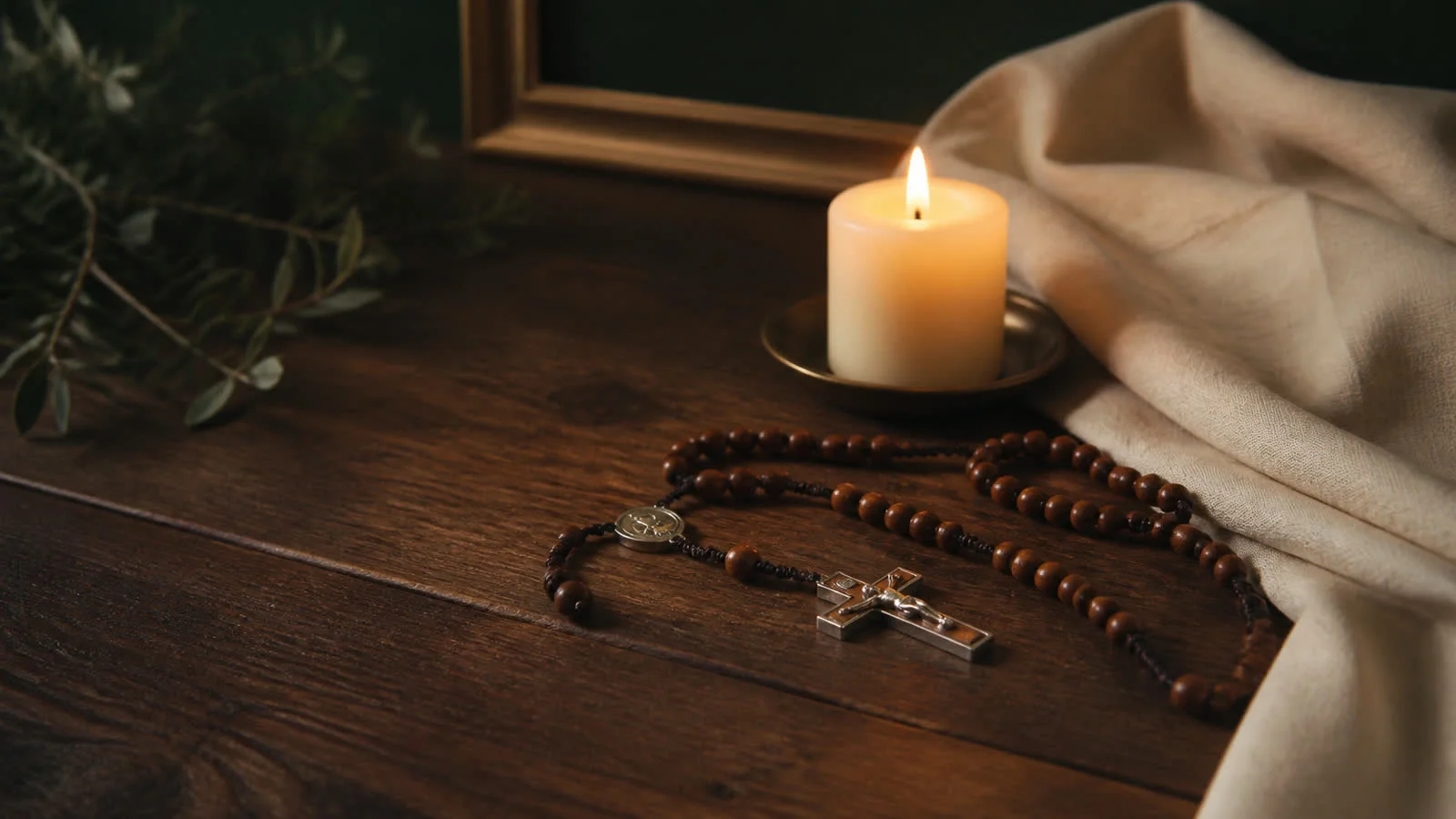
Evening can be the first time you notice how full the day has been. The tasks are finished, or at least paused. The messages are quieter. You may finally have enough space to recognise the things you carried from morning until now.
An evening Rosary can become a gentle transition. It does not need to be a final achievement before bed or a way to force yourself into a particular mood. It can simply mark the movement from activity to stillness.
Create a small transition
Choose one action that tells your body the busy part of the day is changing. Put away a device, make a warm drink, lower the lights or sit in the same chair. You do not need a dramatic ritual. Repetition helps the mind recognise that it is time to pause.
Keep your Rosary within reach. If it is hidden in a drawer, the beginning becomes another decision. A small bowl, a bedside table or a shelf near your usual seat can make it easy to find.
If you use Beadlight, open the app after you have completed the practical tasks that would otherwise interrupt you. Choose the style and guided setting before beginning. The aim is to make the prayer experience quiet, not to spend the evening adjusting it.
Look back without putting the day on trial
Before the first prayer, notice one thing from the day. It may be a kindness you received, a responsibility you carried, a difficult moment or something you wish had gone differently. You do not have to write a complete review.
You can bring the whole day into prayer without deciding that it was either successful or wasted. Gratitude and regret can exist in the same evening. If you need forgiveness, ask honestly. If you need to release a conversation, name it. If you are simply tired, allow tiredness to be part of how you arrive.
Choose one intention for the Rosary. Keep it simple enough that you can return to it when your mind wanders.
Let the beads slow the pace
The physical movement of the Rosary can offer a steady rhythm. Hold the beads without rushing. Allow the spoken prayers, whether prayed silently, aloud or with guided audio, to give the evening a shape.
Beadlight’s guided audio can help you continue when you are tired and do not want to manage the sequence from memory. Hands-free support may be useful if you are walking slowly in a safe setting or if you prefer not to hold your phone while praying. Keep the screen out of your main field of attention.
If a full Rosary feels too demanding, begin with one decade. A shorter prayer can still be a real transition out of the day. You can continue if you have the energy, but do not let the possibility of a longer prayer prevent you from starting.
Protect the atmosphere from pressure
Evening prayer can become another item on a list: finish the dishes, answer the messages, pray the Rosary, complete the routine. When that happens, the purpose can disappear behind the schedule.
Try to approach the Rosary as a place to stop doing for a few minutes. You do not need to improve yourself during the prayer. You do not need to force a conclusion about the day. Let the time be what it is.
If you are praying with a partner or family member, agree that the moment does not need to become a discussion. There will be time to talk afterwards. The prayer can remain simple and shared.
When the evening is difficult
Some nights are not peaceful. You may be grieving, worried, angry or unable to settle. Do not use the Rosary to deny what is happening. Bring the difficulty honestly. If the words feel distant, continue gently or pray only a short section.
If the situation requires practical help, seek it. Prayer can accompany a conversation with someone you trust, professional support or a necessary decision. It does not ask you to carry serious distress alone.
You might use one sentence at the beginning: “This is what I am bringing tonight.” Then let the prayer hold the concern without demanding that it disappear before you finish.
Close with a simple release
At the end, notice what you are ready to leave for tomorrow. You may want to write down one task, place the phone away from the bed or send a message that will allow you to stop rehearsing a conversation in your mind.
The closing does not need to promise that everything is resolved. It can simply acknowledge that the day has ended and you are not required to solve every part of it tonight.
A short evening Rosary can become a steady place to return. Prepare a small transition, bring the day honestly, let the beads slow the pace and leave room for imperfect nights. Prayer does not have to compete with the end of the day. It can help you receive it.
The evening is also a good time to release the idea that you must review the whole day perfectly. You can bring one moment of gratitude, one difficult conversation and one person who needs care. You can acknowledge what remains unfinished without trying to solve it while you pray. If you are very tired, make the start easier: place the beads by your chair, lower the light and choose guided audio so that you can follow without searching for the next prayer. On another night, you may prefer silence. Let the routine have more than one shape. A child may interrupt, a message may arrive or you may realise that sleep is the wiser choice. Begin again the next evening rather than treating one missed prayer as the end of the practice. The aim is a dependable invitation to slow down, not a final task you must complete before you are allowed to rest.
Let the final minutes be gentle rather than hurried.