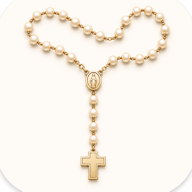

A Scriptural Rosary places a short passage from the Bible alongside each mystery. It can make the Gospel scene more vivid and give a wandering mind somewhere clear to rest. It does not require a large reading plan, specialist knowledge or a different set of Rosary prayers.
The simplest method is to read a few verses before each decade. Other forms place one short verse before every Hail Mary. Both are valid ways to support meditation. Choose the form that helps you attend to Christ rather than the one that looks most impressive on paper.
Know what Scripture is doing
The words of the Our Father, Hail Mary and Glory Be provide the familiar rhythm. The passage supplies the scene: the angel speaking to Mary, Jesus teaching, Christ in Gethsemane or the disciples encountering the risen Lord. St John Paul II’s Rosarium Virginis Mariae presents the Rosary as Christ-centred contemplation with the Gospel at its heart. Scripture is not an interruption inserted between prayers. It helps disclose the mystery being contemplated.
You do not need to analyse every verse. Listen for one detail: a place, an action, a question or a response. Carry that detail through the decade. If another line catches your attention, receive it without trying to collect several insights at once.
Choose one of three simple formats
There are several useful ways to arrange the reading. Pick one before you start so you are not making decisions throughout the Rosary.
- A passage before each decade: Read two to six verses connected with the mystery, then pray the decade in the usual way.
- A sentence within the decade: Read one short sentence before each Hail Mary, allowing the scene to unfold in stages.
- A passage followed by silence: Read the selected verses, pause for a short space, then pray without further additions.
The first format is easiest when you are new to the practice or praying with a group. The second can support close attention but needs a prepared list. The third suits anyone who wants Scripture to establish the scene without adding many spoken words.
Prepare only what you need
Choose the set of mysteries and find one relevant passage for each. Five paper ribbons or slips can mark the pages in advance. A Bible with helpful headings may make this easier, although headings are editorial guides rather than part of the biblical text.
For the Annunciation, for example, use Luke 1. For the Baptism of the Lord, use the relevant account in Matthew, Mark or Luke. For the Passion and Resurrection, each Gospel provides suitable passages. Some mysteries, including the Assumption and Coronation of Mary, are not narrated as single Gospel episodes. A trusted Catholic Scriptural Rosary guide can offer readings that the Church’s tradition associates with them.
Use a translation you can understand and that is approved for Catholic use in your setting. There is no advantage in choosing a longer passage than you can prayerfully receive.
Follow a steady sequence
At the start, make the Sign of the Cross and pray the opening prayers as you normally would. Name the first mystery, read its selected passage and allow a brief pause. Pray the Our Father, ten Hail Marys and the Glory Be, along with any customary prayer you use. Then move to the next mystery and passage.
If you are leading others, explain the pattern in one sentence before the Rosary starts. Decide who will read and whether responses will be shared. Keep the pace natural. The reader does not need to add a reflection after every passage; Scripture and the mystery already provide enough to hold.
Handle distractions without adding pressure
Losing the thread does not spoil the prayer. When you notice that your attention has moved, use the next verse, the name of the mystery or the feel of the beads as a point of focus. There is no need to restart a prayer or judge how well the decade went.
If the reading feels too long, shorten it at the next mystery. If moving between several pages becomes cumbersome, place the five selections on one sheet for personal use while respecting the Bible translation’s copyright. Practical simplicity serves attention.
When praying with children or someone unfamiliar with the Rosary, use fewer verses and explain unfamiliar words only when needed. The aim is shared prayer, not a lesson disguised as devotion.
Let the passage reach daily life
After the final prayers, recall one detail that stayed with you. Perhaps Mary listened before responding, Jesus noticed someone overlooked or the disciples received peace while afraid. Ask how that detail might shape one choice today.
This is not about forcing a lesson from every reading. Sometimes the passage will simply remain with you. At other times it may prompt an apology, an act of patience, a question taken to Scripture study or a concern brought to Mass.
For your next Scriptural Rosary, choose one set of mysteries and mark five short passages in advance. Read each selection once, slowly, before its decade. At the end, write down the single word or action you noticed most, and carry it into the rest of the day.